
Article reviewed by:
Dr Steven Soo • Prosthodontist
Quick Answer
No, it is not recommended to sleep with your dentures in unless your dentist specifically advises otherwise. Removing your dentures at night allows your gums and oral tissues to rest, reduces the risk of infections, and helps prolong the lifespan of your dentures.
Regularly sleeping with dentures can increase your risk of oral health problems, including infections, gum irritation, and even damage to your dentures.
For many people in Singapore, dentures are effective in restoring everyday functions after losing one or more teeth. Tooth loss becomes more common with age, and local data shows that around 13% of Singaporeans aged 60 and above have lost all of their natural teeth, making dentures an important treatment option for restoring chewing, speech and confidence.
Despite how common dentures are, many wearers are unsure about the best way to care for them. Understanding the common misconceptions can help you protect your oral health and keep your dentures in good condition for years to come.
Key Takeaways
- Taking your dentures out before bed gives your gums and oral tissues time to rest.
- Removing dentures at night helps prevent fungal infections, plaque build-up, and bad breath.
- Clean and soak your dentures overnight to maintain their fit and longevity.
- Unless specifically instructed by your dental specialist, do not sleep with your dentures in.
- If your dentures are loose, uncomfortable, or causing sore spots, have them checked by your dentist.
Table of Contents
- Why Shouldn’t You Sleep With Your Dentures In?
- Are There Any Situations Where You May Sleep With Dentures In?
- How Should I Store My Dentures Overnight?
- What Happens If I Accidentally Fall Asleep With My Dentures In?
- Signs Your Dentures May Need an Adjustment
- The Bottom Line
- Frequently Asked Questions
Why Shouldn’t You Sleep With Your Dentures In?
1. Your Gums Need Time to Rest
Just like your feet need a break from wearing shoes all day, the tissues in your mouth also need time to recover from the constant pressure of dentures.
Wearing dentures continuously can:
- Reduce blood flow to your gums
- Cause sore spots and discomfort
- Increase gum inflammation risk and tissue irritation
Removing your dentures for at least six to eight hours a day, usually while you sleep, gives your gums time to rest and recover.
2. Sleeping With Dentures Increases the Risk of Oral Infections
Dentures create a warm and moist environment where bacteria and fungi can thrive.
One common condition associated with overnight denture wear is denture stomatitis, a fungal infection that causes:
- Redness underneath the denture
- Soreness or discomfort
- Swelling of the oral tissues
- Burning sensations in the mouth
Research has shown that people who sleep with their dentures are more likely to develop denture-related infections than those who remove them nightly.
3. Higher Risk of Bad Breath
Food particles, bacteria, and plaque can accumulate on dentures throughout the day.
When dentures remain in the mouth overnight, these bacteria continue multiplying, potentially leading to:
- Persistent bad breath
- Unpleasant taste in the mouth
- Increased plaque build-up
Cleaning your dentures and allowing them to soak overnight helps maintain better oral hygiene and fresher breath.
4. It May Increase the Risk of Gum Disease and Tooth Decay
For patients with partial dentures, sleeping with them in may make it more difficult to clean the remaining natural teeth properly.
Over time, this can contribute to:
- Plaque accumulation
- Gum disease
- Tooth decay
- Bone loss around the remaining teeth
Maintaining good oral hygiene and removing your partial dentures at night can help protect your remaining natural teeth.
5. It Can Shorten the Lifespan of Your Dentures
Constant wear places continuous pressure on dentures and the supporting tissues.
Removing your dentures at night can help:
- Reduce wear and tear
- Maintain a better fit over time
Looking after your dentures properly can help them last longer and reduce the need for repairs or replacement.
Are There Any Situations Where You May Sleep With Dentures In?
In some cases, your dental specialist may advise you to wear your dentures overnight temporarily.
Examples include:
- The first few days after receiving new dentures
- Immediately after certain denture adjustments
- During the healing phase following some dental procedures
This allows your dental specialist to identify areas causing irritation and make necessary adjustments.
However, once the adjustment period is over, most patients are advised to remove their dentures before sleeping.
How Should I Store My Dentures Overnight?
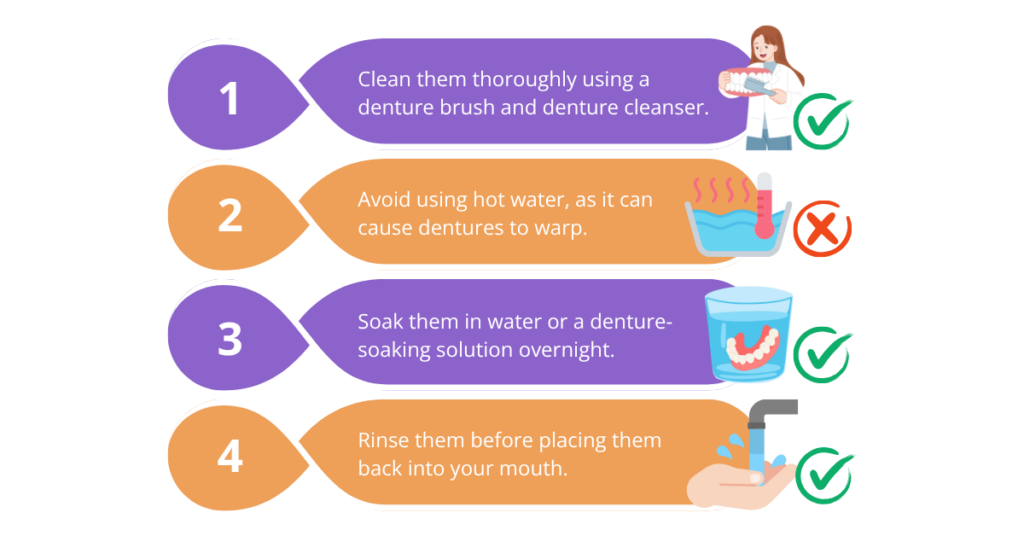
After removing your dentures:
- Clean them thoroughly using a denture brush and denture cleanser.
- Avoid using hot water, as it can cause dentures to warp.
- Soak them in water or a denture-soaking solution overnight.
- Rinse them before placing them back into your mouth.
Keeping dentures moist helps them maintain their shape and fit.
What Happens If I Accidentally Fall Asleep With My Dentures In?
Occasionally falling asleep with your dentures in is usually not an emergency.
However, if it happens:
- Remove your dentures as soon as you wake up.
- Clean both your dentures and your mouth thoroughly.
- Check for any sore spots or discomfort.
If you regularly sleep with your dentures in, make it part of your nightly routine to remove and clean them before bed.
Not sure what’s best for your dentures? Here’s a quick guide to healthy denture habits before bedtime.
| Habit | Recommended? |
| Sleep with dentures every night | ❌ No |
| Remove dentures before bed | ✅ Yes |
| Soak dentures overnight | ✅ Yes |
| Sleep with dentures after adjustment | Sometimes |
| Clean dentures before sleeping | ✅ Always |
Signs Your Dentures May Need an Adjustment
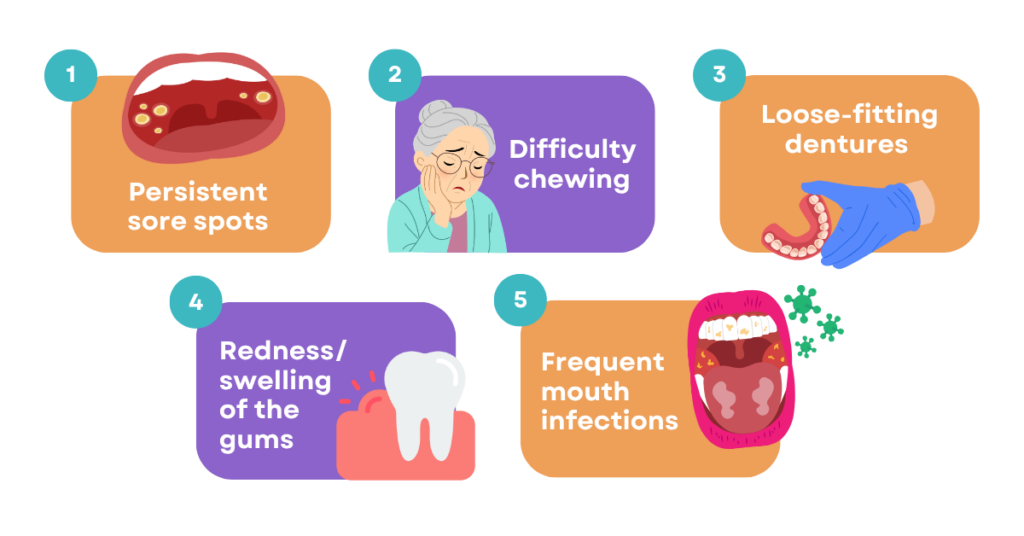
Ill-fitting dentures can cause discomfort and increase the risk of oral problems.
Speak to your dental specialist if you experience:
- Persistent sore spots
- Difficulty chewing
- Loose-fitting dentures
- Redness or swelling of the gums
- Frequent mouth infections
Even if your dentures feel comfortable today, the jawbone naturally shrinks over time after tooth loss. Regular dental check-ups help ensure your dentures continue to fit well and minimise unnecessary pressure on your gums.
The Bottom Line
While it may seem more convenient to keep your dentures in overnight, sleeping with dentures in can increase your risk of infections, gum irritation, bad breath, and other oral health problems.
Removing your dentures before bed, cleaning them properly, and allowing your oral tissues to rest are simple habits that can help keep both your mouth and dentures healthy.
If your dentures feel uncomfortable, loose, or are causing sore spots, a dental review may help identify whether adjustments or replacement are needed.
Frequently Asked Questions
No. Wearing dentures continuously without removing them can increase the risk of gum irritation, infections, and poor oral hygiene.
Dentures typically last 3 years, or longer, depending on wear, changes in your jawbone, and how well they are cared for. Regular dental check-ups can help determine when a replacement or adjustment is needed.
Yes. Drinking water while wearing dentures is generally safe. However, this does not replace the need to remove and clean your dentures before sleeping.
Yes. Even if you no longer have natural teeth, regular dental visits are important to monitor your oral tissues, check the fit of your dentures, and screen for conditions such as oral cancer.
Yes. As the jawbone naturally changes shape over time, dentures may become loose or unstable. Your dentist may recommend relining, adjusting, or replacing your dentures to maintain a comfortable fit.
Yes. Gently brush your gums, tongue, and the roof of your mouth daily to remove bacteria and keep your oral tissues healthy.
It depends. Removable implant-supported dentures should be taken out daily for cleaning, while fixed implant-supported dentures are cleaned in the mouth and should not be removed at home.
If your dentures feel loose, uncomfortable, or you have developed sore spots after wearing them overnight, a prosthodontic assessment can determine whether they require adjustment, relining, or replacement.
Contact Specialist Dental Group via the WhatsApp icon on the bottom right corner, enquire or call us at (65) 6734 9393 to arrange an appointment.

Reviewed by Dr Steven Soo
Dr Steven Soo is a Dental Specialist in Prosthodontics with Specialist Dental Group®. He was formerly a Clinical Lecturer at the Eastman Dental Institute and Clinical Teacher at the GKT Dental Institute, both of which are affiliated with the University of London. Dr Soo has a special interest in prosthetic and implant restorative dentistry. He also enjoys seeing children.
Disclaimer
This article has been medically reviewed by a specialist from Specialist Dental Group and is intended for general educational and informational purposes only. It should not be taken as a substitute for personalised dental advice, diagnosis, or treatment. Patients should consult a qualified dentist or dental specialist before making decisions about any procedure or treatment plan. Treatment recommendations should always be based on the patient’s individual clinical condition, and results may vary.