
Article reviewed by:
Dr Steven Soo • Prosthodontist
Dentures are a common and effective way to replace missing teeth. However, many denture wearers experience problems when their dentures become loose or no longer fit properly over time.
Loose or ill-fitting dentures can cause discomfort, difficulty speaking, and problems with eating. In some cases, poorly fitting dentures may also affect long-term oral health.
Understanding why dentures become loose, the problems they can cause, and the available treatment options can help you maintain comfort and confidence in your smile.
Table of Contents
- Why Do Dentures Become Loose?
- Signs Your Dentures No Longer Fit Properly
- Problems Caused by Ill-Fitting Dentures
- What Makes Dentures Fit Properly?
- Treatment Options For Loose Dentures in Singapore
- Alternatives to Traditional Dentures
- Denture Care Tips
- How Specialist Dental Group Tailors Denture Solutions
- Frequently Asked Questions (FAQ) About Dentures
Why Do Dentures Become Loose?
Dentures often become loose because the jawbone naturally shrinks after teeth are lost. When tooth roots are no longer present, the jawbone gradually resorbs and changes shape. As a result, dentures that once fit well may become unstable over time.
Other factors that can cause loose dentures include:
- Natural changes in gum and bone structure
- Wear and tear of denture materials
- Poor initial denture fit
- Weight loss or facial structure changes
- Long-term use without adjustment
Because of these changes, dentures may need periodic adjustments, relining, or replacement.
Signs Your Dentures No Longer Fit Properly
You may notice several symptoms when dentures no longer fit correctly.
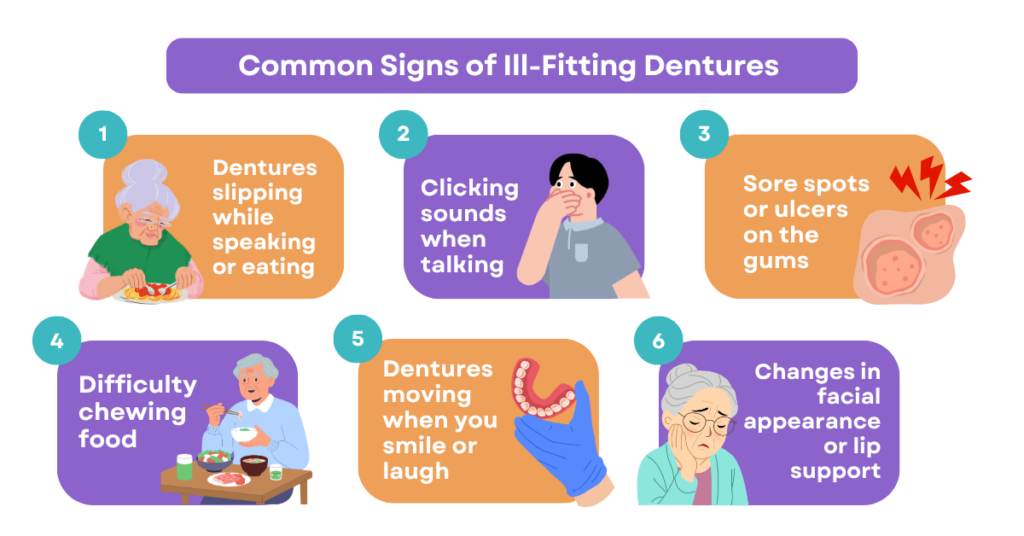
Common signs of ill-fitting dentures include:
- Dentures slipping while speaking or eating
- Clicking sounds when talking
- Sore spots or ulcers on the gums
- Difficulty chewing food
- Dentures moving when you smile or laugh
- Changes in facial appearance or lip support
If you experience any of these symptoms, a dental specialist can evaluate whether your dentures need adjustment or replacement.
Problems Caused by Ill-Fitting Dentures
Poorly fitting dentures can affect both your comfort and your oral health.
1. Soreness and Mouth Ulcers
When dentures do not fit properly, uneven pressure may be placed on the gums. This can lead to sore spots, inflammation, and painful ulcers that make eating and speaking uncomfortable.
2. Accelerated Jawbone Loss
Traditional dentures rest on the gums rather than replacing tooth roots. Over time, pressure on the jawbone may accelerate bone loss, making dentures even looser.
3. Increased Risk of Tooth Decay and Gum Disease
Food particles can become trapped under dentures or between dentures and remaining natural teeth. This may increase the risk of:
- Tooth decay
- Gum disease
- Bad breath
Good oral hygiene and regular dental visits are important for preventing these problems.
4. Chronic Irritation of Oral Tissues
Long-term irritation from poorly fitting dentures can damage oral tissues. Persistent sores or ulcers should always be examined by a dentist.
5. Difficulty Eating and Poor Nutrition
Loose dentures can make it difficult to chew certain foods such as meat, fruits and vegetables. Some denture wearers switch to softer foods that may be higher in sugar and lower in nutrients.
Over time, this may contribute to:
- Weight gain
- Malnutrition
- Vitamin deficiencies
What Makes Dentures Fit Properly?
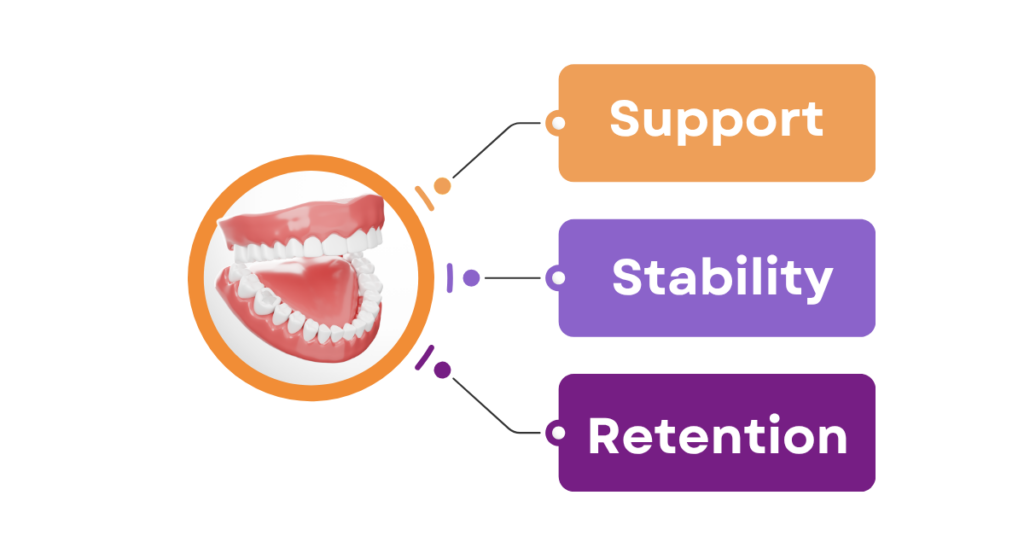
Well-designed dentures should provide three key qualities:
Support – the denture rests securely on the gums and jawbone
Stability – the denture does not move during chewing or speaking
Retention – the denture stays in place without slipping
Properly fitting dentures should:
- Feel comfortable when chewing
- Allow clear speech and pronunciation
- Stay securely in place
- Provide natural facial support and appearance
If dentures become loose or uncomfortable, your dental specialist may recommend adjustments, relining, or replacement.
Treatment Options For Loose Dentures in Singapore
Several treatments can help improve the fit of dentures.
Denture Adjustment
Minor changes in denture fit can sometimes be corrected by adjusting pressure areas on the denture base.
Denture Relining
Relining involves adding new material to the inside surface of the denture so it fits the gums more closely. This procedure is often recommended when the gums or jawbone have changed shape.
Denture Replacement
Dentures may eventually need to be replaced due to wear or changes in the mouth. New dentures may provide improved comfort, function and aesthetics.
Alternatives to Traditional Dentures
For some patients, modern tooth replacement treatments may provide greater stability than removable dentures.
- Dental implants replace missing tooth roots and provide a stable foundation for crowns, bridges or dentures. Because implants integrate with the jawbone, they can improve chewing ability and provide long-term support.
- Implant-supported dentures attach securely to dental implants. This option can provide better stability and reduce denture movement compared with traditional removable dentures.
- All-on-4 Dental Implants uses four strategically placed dental implants to support a full arch of teeth. This approach may provide a fixed and stable alternative for patients who have lost most or all of their teeth.
A prosthodontist — a dental specialist in restoring and replacing teeth — can assess which treatment option is most suitable for your needs.
Denture Care Tips
Proper denture care can help extend the lifespan of your dentures and maintain good oral health.
Visit Your Dentist Regularly
Because gums and jawbones change over time, dentures may become loose. Regular dental visits allow your dentist to check the fit of your dentures and recommend adjustments if necessary.
Clean Dentures Daily
After meals:
- Rinse dentures and your mouth
- Brush dentures with a soft brush and denture cleanser
- Remove food particles and plaque
Avoid Using Toothpaste
Toothpaste can be abrasive and may damage the surface of denture materials. Denture-specific cleaning products are usually recommended.
Remove Dentures at Night
Dentures should generally not be worn while sleeping. Removing them allows oral tissues to rest and helps reduce the risk of infection.
Store Dentures Properly
When not in use, dentures should be kept in clean water or denture solution to prevent them from drying out and losing their shape.
How Specialist Dental Group Tailors Denture Solutions
At Specialist Dental Group, our team of dental specialists at Mount Elizabeth Orchard and Gleneagles provides comprehensive denture care that meet the unique needs of each individual. They fall under the speciality areas of Prosthodontics.
- Dr Steven Soo, Prosthodontist
- Dr Tan Kian Meng, Prosthodontist
- Dr Edwin Tan, Prosthodontist (Gleneagles)
- Dr Neo Tee Khin, Prosthodontist
- Dr Ansgar Cheng, Prosthodontist
Frequently Asked Questions (FAQ) About Dentures
Yes. Dentures can often be tightened without replacement through procedures such as denture relining or rebasing. These treatments reshape the inside surface of the denture to fit the gums more closely. Your dentist will assess whether the denture structure is still suitable for relining.
Denture adhesives are generally safe when used as directed. They can temporarily improve denture stability. However, adhesives should not be used as a long-term solution for loose dentures. If dentures require frequent adhesive use, a dental evaluation is recommended.
Dentures are durable but can still wear, crack, or become damaged over time. Dropping dentures, grinding teeth, or long-term use can weaken the material. Damaged dentures should be repaired by a dental professional rather than fixed at home.
Home denture repair kits are not recommended. Improper repairs can damage the denture and affect the fit. If a denture breaks or cracks, it should be evaluated and repaired by a dentist or dental laboratory.
Wish to learn more about treatment options for loose dentures? Consult our dental specialists for personalised advice.
Drop us a text via the WhatsApp icon on the bottom right corner, enquire or call us at (65) 6733 7883.

Reviewed by Dr Steven Soo
Dr Steven Soo is a Dental Specialist in Prosthodontics with Specialist Dental Group®. He was formerly a Clinical Lecturer at the Eastman Dental Institute and Clinical Teacher at the GKT Dental Institute, both of which are affiliated with the University of London. Dr Soo has a special interest in prosthetic and implant restorative dentistry. He also enjoys seeing children.
Disclaimer
This article has been medically reviewed by a specialist from Specialist Dental Group and is intended for general educational and informational purposes only. It should not be taken as a substitute for personalised dental advice, diagnosis, or treatment. Patients should consult a qualified dentist or dental specialist before making decisions about any procedure or treatment plan. Treatment recommendations should always be based on the patient’s individual clinical condition, and results may vary.