Article reviewed by:
Dr Steven Soo • Prosthodontist
Quick Answer
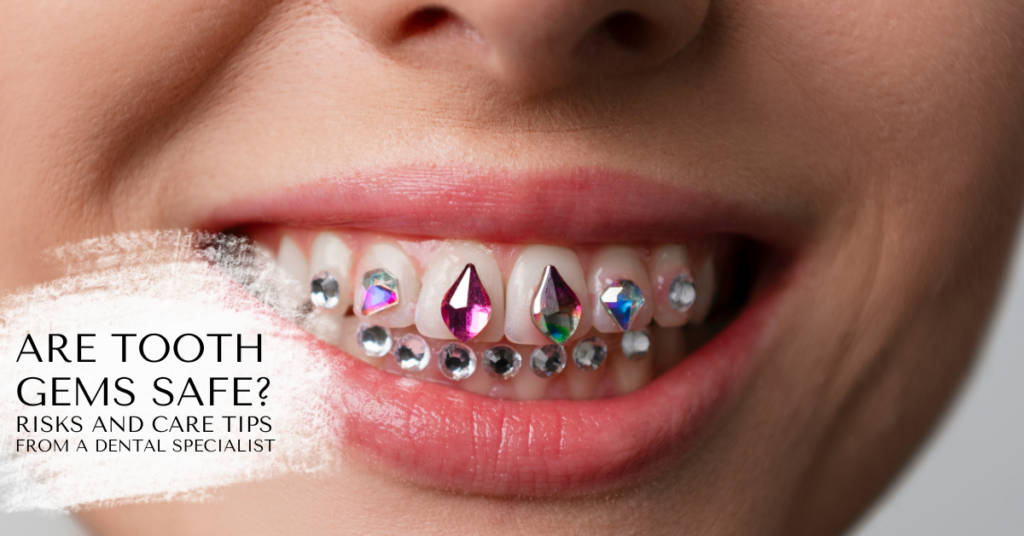
Tooth gems may look harmless, but they can increase the risk of plaque build-up, tooth decay, gum irritation and enamel damage. The American Dental Association (ADA) advises against tooth gems and other oral jewellery because of these potential oral health risks. If you’re considering one, it’s best to speak to a dentist first and avoid DIY application or removal.
Tooth gems are part of a wider interest in personalised beauty and cosmetic trends, particularly among younger consumers. This highlights an important point: being popular doesn’t necessarily mean a beauty trend is risk-free.
Tooth gems are cosmetic rather than therapeutic. They don’t improve the health or function of your teeth, so it’s important to consider whether the aesthetic benefit is worth the potential oral health risks.
Key Takeaways
- Tooth gems can make plaque control more difficult.
- Incorrect placement may irritate the gums or interfere with the bite.
- DIY adhesives and removal methods may damage enamel.
- Existing decay, gum disease and weakened enamel should be assessed first.
Table of Contents
What Are Tooth Gems?
Tooth gems are small crystals, jewels or decorative pieces attached to the surface of a tooth using an adhesive. They are most commonly placed on visible front teeth for cosmetic purposes, and are usually bonded to the tooth surface without drilling. However, the bonding process may involve preparing or etching the enamel, and incorrect application or removal can affect the tooth surface.
The trend isn’t new. Tooth jewellery has been around for decades but has recently returned to popularity, due to the influence of social media, celebrities and beauty influencers. The trend has made its way to Singapore too. The Straits Times has reported on the growing interest in tooth gems among Singaporeans, with local dental professionals raising concerns about oral hygiene, tooth decay, gum disease and irritation.
Are Tooth Gems Safe for Your Teeth?
Tooth gems can pose oral health risks, particularly when they are poorly applied, difficult to clean around or improperly removed.
The American Dental Association (ADA) currently advises against tooth gems and other forms of dental jewellery because of their potential to cause negative oral health effects. These include plaque accumulation, tooth decay, enamel damage, chipped teeth and inflammation of the gums.
This doesn’t mean that everyone who wears a tooth gem will develop a dental problem. However, the placement of the gem, the materials used and your ability to keep the area clean can all affect your risk.
What Problems Can Tooth Gems Cause?
1. Plaque Can Collect Around The Gem
A tooth gem creates another surface around which plaque and food particles can accumulate. If these areas aren’t cleaned effectively, bacteria can remain on the tooth for longer and contribute to tooth decay or gum inflammation.
This is especially relevant if you’re already prone to cavities. Our article explains why brushing and flossing don’t always eliminate every risk factor for tooth decay.
2. Your Gums May Become Irritated
A gem that is too large or positioned too close to the gum may rub against the surrounding tissue.
Persistent redness, swelling, tenderness or bleeding around the tooth shouldn’t simply be dismissed as part of getting used to the jewellery.
3. Cleaning May Become More Difficult
Anything attached to your teeth can make certain areas more challenging to clean. Brushing twice a day and cleaning between your teeth are important for removing plaque.
4. The Gem Can Come Loose
A tooth gem can loosen or fall off. It may be swallowed and, less commonly, could enter the airway. The risk may be greater when tooth gems are applied outside a professional dental setting.
5. Removal Can Damage The Tooth
Thinking about taking your tooth gem off yourself? It’s better not to scrape, pull or file it away. Attempting to remove the adhesive incorrectly may damage the tooth surface. If you no longer want the gem, ask a dentist to assess it and determine the safest way to remove it.
Can Tooth Gems Damage Enamel?
Tooth enamel can potentially be damaged by improper application or removal of a tooth gem. Enamel is the hard outer layer that protects your teeth, but it can still be chipped, scratched or worn away.
The American Dental Association (ADA) notes that oral jewellery, including tooth gems, may contribute to enamel damage and chipped teeth. Another concern is the adhesive. Not every type of glue is suitable for use inside the mouth. DIY tooth gem kits may contain adhesives or materials that aren’t intended for dental use. Household adhesives and cosmetic products such as nail glue should never be used on your teeth.
Who Should Avoid Tooth Gems?
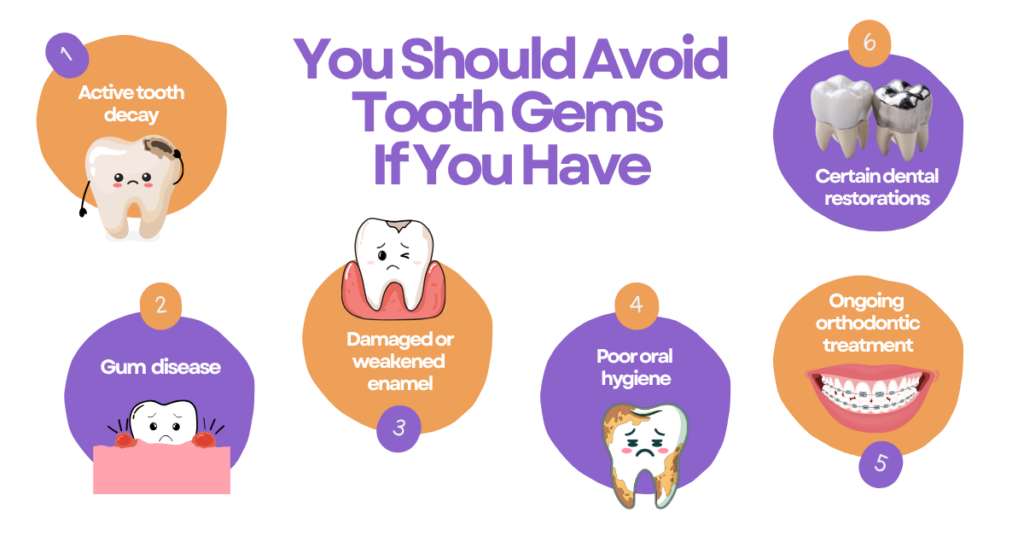
The following groups should avoid tooth gems:
- People with active tooth decay or gum disease
- Those with weakened, cracked or heavily worn enamel
- People who struggle to maintain good oral hygiene
- Patients currently undergoing orthodontic treatment
- Teeth with crowns, veneers or large fillings that require individual assessment
How Can You Look After Your Teeth If You Have a Tooth Gem?
If you already have a tooth gem, don’t let the accessory interfere with your normal oral hygiene routine.
Try to:
- Brush twice a day with fluoride toothpaste.
- Floss your teeth at least once daily.
- Pay particular attention to the area around the gem.
- Avoid biting hard objects or ice with the decorated tooth.
- Don’t pick, twist or constantly play with the gem.
- Don’t attempt to remove a loose gem yourself.
- Continue with your regular dental check-ups.
If you experience pain, sensitivity, gum swelling, bleeding or persistent irritation around the gem, arrange a dental consult with your dental specialist.
Tooth gems may come and go as a beauty trend, but looking after your natural teeth should always be the priority. After all, a healthy smile never goes out of style.
Frequently Asked Questions
You can generally continue eating normally, but it is sensible to avoid biting very hard foods or objects directly with the decorated tooth. Hard or sticky foods may also increase the chance of loosening the gem.
A very small, properly positioned gem is unlikely to significantly alter your bite. However, a larger or poorly positioned piece may interfere with how your upper and lower teeth come together. If your bite feels different after getting a tooth gem, have it checked by a dental specialist.
A tooth gem itself doesn’t automatically cause bad breath. However, if plaque, bacteria or food debris collect around the gem and aren’t removed effectively, it may contribute to unpleasant breath.
This depends on the restoration and its condition. Bonding a cosmetic accessory to a restoration is different from bonding directly to natural enamel, and the adhesive may not behave in the same way. A dentist should assess the tooth or restoration before placement.
Tooth gems may not be appropriate while wearing braces because they can interfere with orthodontic appliances, cleaning or tooth movement. Always check with your orthodontist before adding any jewellery to your teeth.
Don’t try to glue it back yourself. If you experience discomfort or notice damage to the tooth, arrange a dental assessment. If you have swallowed the gem and feel unwell or have difficulty breathing, seek urgent medical attention.
The answer depends on how the gem was attached and removed. Residual adhesive may need to be professionally cleaned and polished away. Improper removal can potentially damage the enamel.
Considering a tooth gem? Your smile deserves more than just sparkle. Speak to our dental team to find out if tooth gems are suitable for your teeth and gums.
Contact Specialist Dental Group via the WhatsApp icon on the bottom right corner, enquire or call us at (65) 6734 9393 to arrange an appointment.

Reviewed by Dr Steven Soo
Dr Steven Soo is a Dental Specialist in Prosthodontics with Specialist Dental Group®. He was formerly a Clinical Lecturer at the Eastman Dental Institute and Clinical Teacher at the GKT Dental Institute, both of which are affiliated with the University of London. Dr Soo has a special interest in prosthetic and implant restorative dentistry. He also enjoys seeing children.
Disclaimer
This article has been medically reviewed by a specialist from Specialist Dental Group and is intended for general educational and informational purposes only. It should not be taken as a substitute for personalised dental advice, diagnosis, or treatment. Patients should consult a qualified dentist or dental specialist before making decisions about any procedure or treatment plan. Treatment recommendations should always be based on the patient’s individual clinical condition, and results may vary.