Article reviewed by:
Dr Tan Kian Meng • Prosthodontist
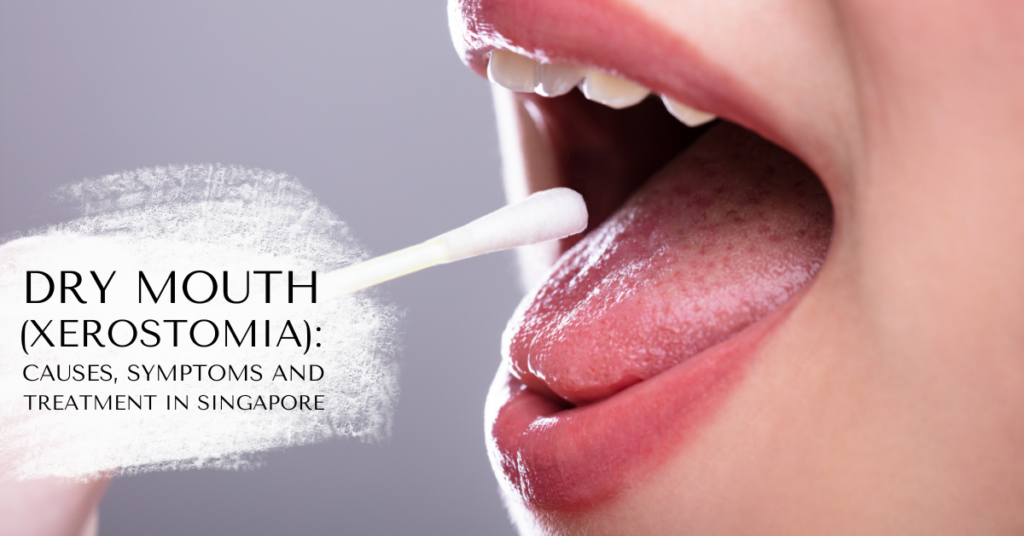
Do you often wake up with a dry mouth, or do you feel like your mouth is constantly sticky or uncomfortable?
Dry mouth (xerostomia) is a common condition in Singapore, especially among adults taking medications or spending long hours in air-conditioned environments, and particularly common among older adults and those in nursing homes.
Table of Contents
- What Is Dry Mouth (Xerostomia)?
- Why Saliva Matters More Than You Think
- Dry Mouth in Singapore: Why It’s Common
- Common Causes of Dry Mouth
- Symptoms of Dry Mouth
- Why is My Mouth Dry at Night?
- What Happens If Dry Mouth Is Not Treated?
- How To Treat Dry Mouth in Singapore
- When Should You See a Dental Specialist for Dry Mouth?
- Take Charge of Your Oral Health
- Frequently Asked Questions
What Is Dry Mouth (Xerostomia)?
Dry mouth, or xerostomia, occurs when your salivary glands do not produce enough saliva to keep your mouth comfortably moist.
Many patients only realise how important saliva is when simple tasks like eating or speaking become uncomfortable. Patients often describe it as a constant dryness, a sticky sensation, or difficulty swallowing even simple foods.
Saliva plays a quiet but critical role in daily life. When saliva levels are low, both comfort and oral health can be affected quite quickly.
Why Saliva Matters More Than You Think
Saliva does much more than keep your mouth moist. It helps to:
• Wash away food particles and bacteria
• Neutralise harmful acids produced by plaque
• Aid in chewing, swallowing, and speaking
• Support digestion
• Repair early tooth damage through remineralisation
Saliva contains essential minerals such as calcium and phosphate, which help strengthen tooth enamel and prevent tooth decay.
A healthy adult typically produces about 0.5 to 1.5 litres of saliva daily, highlighting its importance in maintaining normal oral function.
Dry Mouth in Singapore: Why It’s Common
Dry mouth is increasingly common in Singapore due to lifestyle and environmental factors:
- Air-conditioned environments can accelerate dehydration
- High coffee and tea consumption may reduce saliva flow
- Ageing population with increased medication use
- Busy lifestyles lead to inadequate hydration
Because these factors are common locally, many people may experience dry mouth without realising it.
In specialist practice like ours, this condition is often observed in patients undergoing medical treatments or managing chronic conditions.
Common Causes of Dry Mouth
Dry mouth is often a symptom of an underlying issue rather than a condition in itself.
1. Medications
Many common medications reduce saliva production, including:
- Antihistamines
- Antidepressants
- Blood pressure medications
2. Medical Conditions
Certain health conditions can affect the salivary glands, such as:
- Sjögren’s syndrome
- Diabetes
3. Cancer Treatment
Radiation therapy to the head and neck can damage salivary glands, leading to long-term dry mouth.
4. Lifestyle Factors
- Dehydration
- Smoking
- Alcohol consumption
Symptoms of Dry Mouth
Common signs of xerostomia include:
- Persistent dryness or a sticky feeling in the mouth
- Difficulty chewing, swallowing, or speaking
- Cracked lips or dry tongue
- Burning sensation in the mouth
- Increased thirst
- Bad breath
Why is My Mouth Dry at Night?
Dry mouth at night is a very common concern.
It may be caused by:
- Mouth breathing during sleep
- Dehydration
- Air-conditioned rooms
- Medications taken in the evening
Saliva production naturally decreases during sleep, which can make symptoms more noticeable.
What Happens If Dry Mouth Is Not Treated?
Without enough saliva, your oral health can deteriorate over time.
- Increased Risk of Tooth Decay: Saliva helps neutralise acids and repair enamel. Without it, teeth are more vulnerable to cavities.
- Difficulty Eating and Speaking: Reduced saliva production can make chewing and swallowing uncomfortable and may affect speech.
- Higher Risk of Oral Infections: Saliva helps control microbial growth. Low saliva levels can increase the risk of infections such as oral thrush.
- Changes in Oral Environment: Alterations in saliva composition and pH can weaken its protective function, making it harder to maintain a healthy balance in the mouth.
How To Treat Dry Mouth in Singapore
While simple measures can help relieve symptoms, persistent dry mouth often requires professional assessment and targeted treatment. Depending on the cause, treatment may include adjusting medications under your physician’s supervision, managing underlying medical conditions, or protecting teeth with prescription-strength fluoride.
1) Self-care measures for Dry Mouth
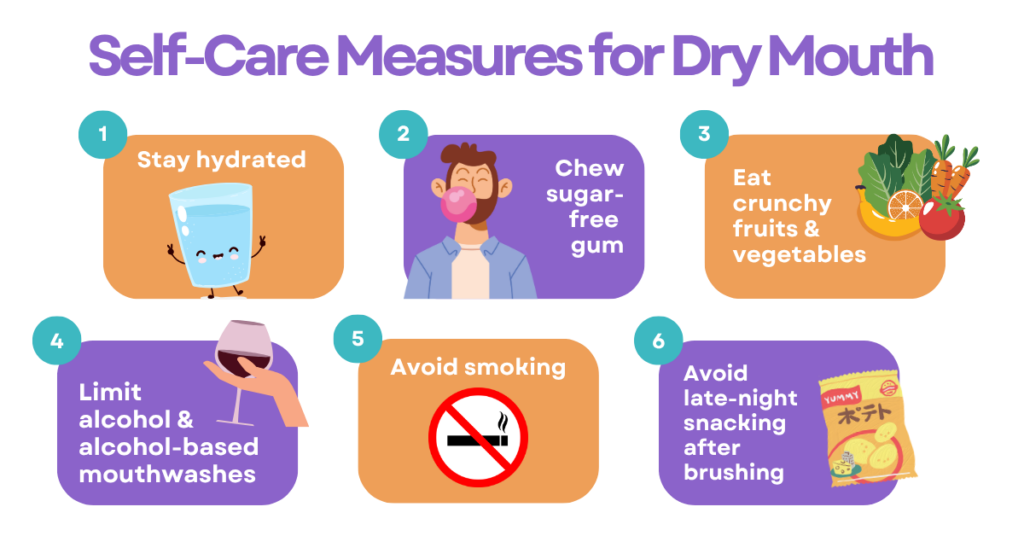
Simple lifestyle habits can help support and stimulate saliva production.
- Stay hydrated
Drinking enough water helps maintain consistent saliva flow. - Chew sugar-free gum
Chewing stimulates the salivary glands, increasing saliva production. - Eat crunchy fruits and vegetables
Foods such as apples, carrots, and celery naturally promote saliva flow. - Limit alcohol and alcohol-based mouthwashes
These can dry out the mouth and worsen symptoms. - Avoid smoking
Smoking reduces salivary gland function, contributing to dry mouth. - Avoid late-night snacking after brushing
Saliva flow decreases during sleep, reducing the mouth’s ability to protect itself against acids.
2) Professional Treatment for Dry Mouth
If symptoms persist, a dental specialist can provide targeted treatment based on the cause.
- Identify and Address Underlying Causes
A thorough assessment may reveal contributing factors such as
– Medication side effects
– Sjögren’s syndrome (or other autoimmune disorders)
– Effects of cancer therapy
Managing these conditions is key to long-term improvement. - Prescription Saliva Stimulants
In some cases, medications may be prescribed to stimulate saliva production. These are typically used when salivary gland function is still partially intact. - Saliva Substitutes and Oral Moisturisers
These products help mimic natural saliva and are particularly useful for patients with more severe or persistent dryness. - Fluoride Therapy for Tooth Protection
Patients with dry mouth are at significantly higher risk of tooth decay. Your dental specialist may recommend fluoride applications and high-fluoride toothpaste to protect enamel.
It’s worth seeking professional advice if you notice:
- Persistent dry mouth
- Difficulty swallowing or speaking
- Increased tooth sensitivity or decay
- Bad breath that does not improve
Dry mouth can sometimes point to an underlying condition, so it’s best not to ignore it. Early evaluation allows your dentist to identify the cause and recommend appropriate treatment.
Take Charge of Your Oral Health
Saliva is your mouth’s first line of defence. When it functions well, it protects, repairs, and supports your oral ecosystem. When it is reduced, even simple daily activities can become challenging.
At Specialist Dental Group, our dental specialists can assess the underlying causes of dry mouth and recommend appropriate treatment to protect your oral health.
If you are experiencing symptoms of xerostomia or concerns about your oral health, consult one of our specialists for personalised advice.
Frequently Asked Questions
Mouth breathing, dehydration, or certain medications can cause dry mouth at night. Saliva production naturally decreases during sleep, which can worsen dryness. Sleeping with your mouth open or in an air-conditioned environment may also contribute to the problem.
Yes. Dry mouth increases the risk of tooth decay, gum disease, and enamel erosion. Without enough saliva to neutralise acids and wash away bacteria, teeth become more vulnerable to cavities and oral infections.
Drinking water helps relieve dry mouth symptoms but may not address the underlying cause. If dry mouth is due to medication or a medical condition, additional treatment may be needed.
If you’re experiencing persistent dry mouth, early assessment can help prevent tooth decay and long-term complications.
Our dental specialists can identify the cause and recommend targeted treatment tailored to your condition. Drop us a text via the WhatsApp icon on the bottom right corner, enquire or call us at (65) 6733 7883.
Reviewed by Dr Tan Kian Meng
Dr Tan Kian Meng is a Dental Specialist in Prosthodontics with Specialist Dental Group®. He is also a Clinical Lecturer at the National University of Singapore and Diplomate with the American Board of Prosthodontics. He was formerly a Consultant at Singapore’s Khoo Teck Puat Hospital and Fellow of Maxillofacial Prosthetics and Oncologic Dentistry Fellowship at the University of Texas MD Anderson Cancer Center. Dr Tan has special interest in prosthetic and implant restorative dentistry.
Disclaimer
This article has been medically reviewed by a specialist from Specialist Dental Group and is intended for general educational and informational purposes only. It should not be taken as a substitute for personalised dental advice, diagnosis, or treatment. Patients should consult a qualified dentist or dental specialist before making decisions about any procedure or treatment plan. Treatment recommendations should always be based on the patient’s individual clinical condition, and results may vary.