
Article reviewed by:
Dr Steven Soo • Prosthodontist
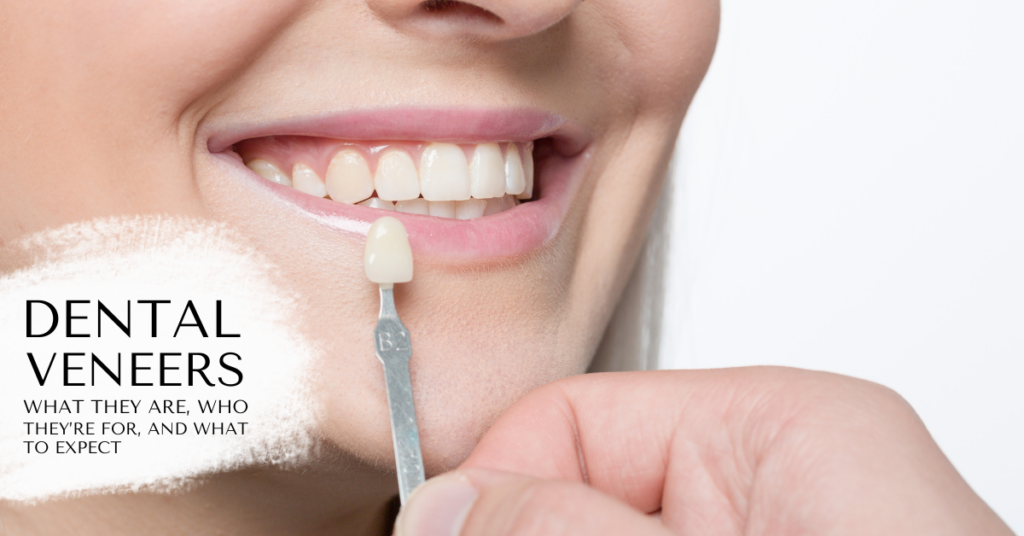
If you’ve ever wished your teeth looked a little brighter, straighter, or more even, you may have considered dental veneers as one of the options.
Dental veneers are thin shells, usually made from high-quality porcelain, that are bonded to the front surface of teeth. Their purpose is to improve the appearance of your smile while preserving as much natural tooth structure as possible.
At Specialist Dental Group in Singapore, veneers are considered when patients want to address cosmetic concerns without undergoing more extensive restorative treatment.
Table of Contents
- What Exactly Are Dental Veneers?
- Who Might Benefit from Veneers?
- Who May Not Be Suitable for Veneers?
- What Is the Dental Veneer Process Like?
- How Long Do Dental Veneers Last?
- Alternatives to Dental Veneers
- Setting Realistic Expectations
- How Specialist Dental Group Creates Natural-Looking Veneers
- Frequently Asked Questions (FAQ) About Dental Veneers
What Exactly Are Dental Veneers?
Porcelain veneers are custom-made restorations designed to sit over the visible front surface of a tooth. They can help improve:
- Discoloured teeth that do not respond well to whitening
- Chipped or slightly worn teeth
- Uneven or irregularly shaped teeth
- Small gaps between teeth
- Mild alignment concerns
Porcelain veneers are highly durable and designed to mimic the translucency and appearance of natural enamel.
Who Might Benefit from Veneers?
Veneers are usually suitable for individuals who have healthy teeth and gums but are unhappy with certain aspects of their smile.
They work best for cosmetic refinements rather than correcting major bite problems or significant misalignment. In cases where alignment issues are more pronounced, orthodontic treatment may be more appropriate.
Every case is different, which is why a detailed clinical assessment is important before deciding on treatment.
Who May Not Be Suitable for Veneers?
Veneers may not be recommended if you:
- Frequently grind or clench your teeth (bruxism)
- Have insufficient enamel
- Have untreated gum disease or tooth decay
- Have significant bite problems
A comprehensive evaluation by a dental specialist is essential before treatment.
What Is the Dental Veneer Process Like?
Depending on your case, it typically requires 2–3 visits to get veneers.
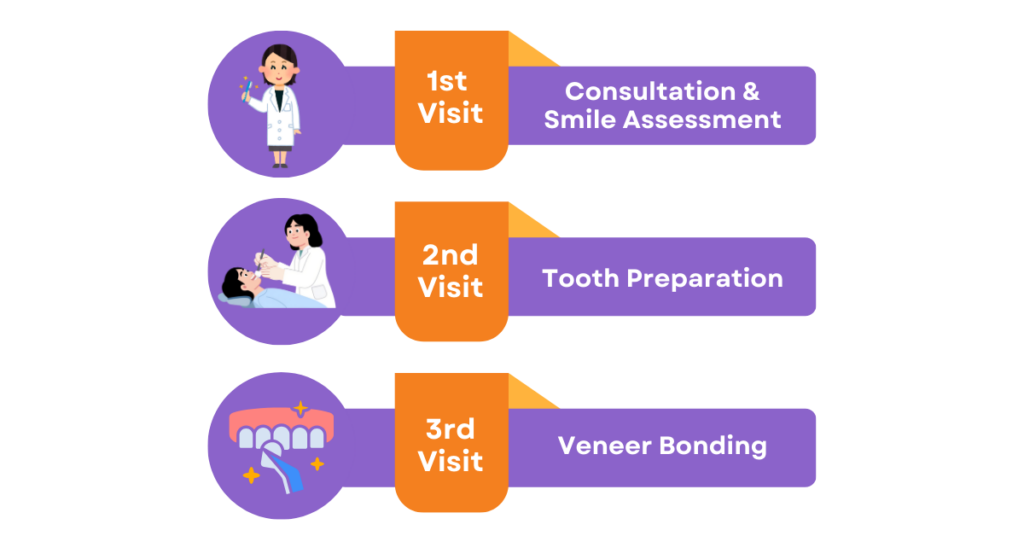
Your initial visit to our dental clinic in Singapore focuses on assessment and planning. Your dental specialist will:
- Examine your teeth, gums, and bite
- Discuss your concerns
- Determine whether veneers are a suitable treatment option
- Provide a personalised treatment plan for you
2. Tooth Preparation
If you decide to proceed, a small amount of enamel (usually less than 1mm) is removed from your tooth surface. Impressions or digital scans are taken and sent to a dental laboratory to fabricate your custom veneers. Temporary veneers may be placed while you wait for the final restorations.
3. Veneer Bonding
Once your veneers are ready, they are tried in to check their fit, shape, and colour. Minor adjustments can be made at this stage.
When both you and your dental specialist are satisfied, the veneers are bonded to the teeth, and final bite checks are carried out to ensure comfort.
The result is a natural-looking smile designed to blend seamlessly with your surrounding teeth.
How Long Do Dental Veneers Last?
With proper care and regular dental reviews, porcelain veneers can last 10–20 years, although longevity varies from person to person.
To prolong their lifespan:
- Maintain good oral hygiene
- Avoid biting hard objects
- Wear a nightguard if you grind your teeth
- Attend regular dental check-ups
Alternatives to Dental Veneers
Depending on what you would like to improve and your existing dental condition, your specialist may recommend other treatments that are more appropriate:
- Professional teeth whitening (for colour concerns)
- Dental crowns (for structurally weakened teeth)
- Orthodontic treatment (for alignment issues)
- Composite bonding (for minor corrections)
Your treatment plan should always be personalised.
Setting Realistic Expectations
Veneers are durable but not indestructible.
They:
- Improve aesthetics significantly
- Do not replace natural teeth
- Require ongoing maintenance
- May eventually need replacement
When carefully planned and executed by an experienced dental specialist, veneers can significantly enhance confidence and smile harmony.
How Specialist Dental Group Creates Natural-Looking Veneers
At Specialist Dental Group, our team of dental specialists at Mount Elizabeth Orchard and Gleneagles provides custom-made veneer solutions for each individual. They fall under the speciality areas of Prosthodontics.
- Dr Steven Soo, Prosthodontist
- Dr Tan Kian Meng, Prosthodontist
- Dr Edwin Tan, Prosthodontist (Gleneagles)
- Dr Neo Tee Khin, Prosthodontist
- Dr Ansgar Cheng, Prosthodontist
Frequently Asked Questions (FAQ) About Dental Veneers
No. When performed properly, only a small amount of enamel is removed. Veneers are considered safe when planned and placed by an experienced dental specialist.
After a short adjustment period, veneers feel very similar to natural teeth and should not affect speech or chewing.
The fees vary depending on:
– Number of veneers required
– Material used (porcelain vs composite)
– Complexity of the case
– Specialist expertise
A consultation is required for an accurate assessment and quotation.
There is no strict age limit, provided teeth and gums are healthy and fully developed.
Considering Veneers? Consult our dental specialists for personalised advice.
Drop us a text via the WhatsApp icon on the bottom right corner, enquire or call us at (65) 6733 7883.

Reviewed by Dr Steven Soo
Dr Steven Soo is a Dental Specialist in Prosthodontics with Specialist Dental Group®. He was formerly a Clinical Lecturer at the Eastman Dental Institute and Clinical Teacher at the GKT Dental Institute, both of which are affiliated with the University of London. Dr Soo has a special interest in prosthetic and implant restorative dentistry. He also enjoys seeing children.
Disclaimer
This article has been medically reviewed by a specialist from Specialist Dental Group and is intended for general educational and informational purposes only. It should not be taken as a substitute for personalised dental advice, diagnosis, or treatment. Patients should consult a qualified dentist or dental specialist before making decisions about any procedure or treatment plan. Treatment recommendations should always be based on the patient’s individual clinical condition, and results may vary.